
Secrets of the Altissimo Register
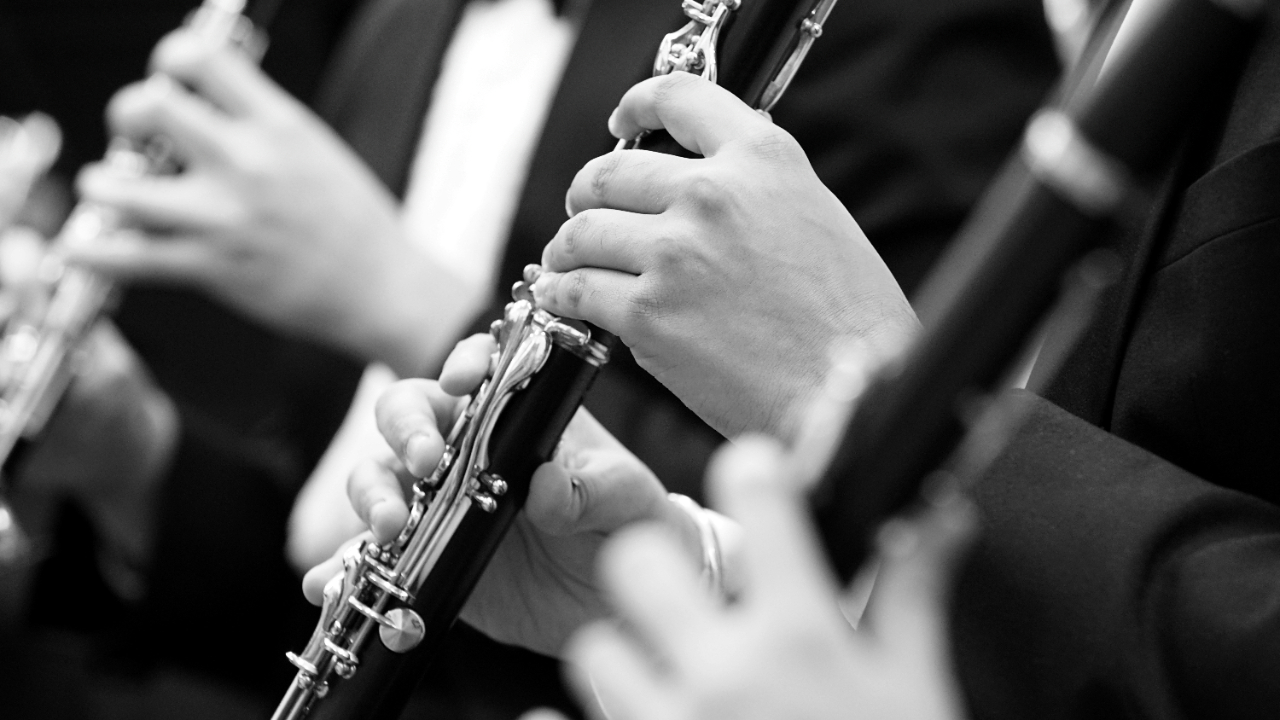
Photo by Laura Rivera on Unsplash
The altissimo register is one of those things that every clarinetist eventually has to tackle, and for a lot of players it feels like a wall. The notes are finicky, they squeak, they don't always come out on command, and the harder you try, the worse it gets.
Here's the good news: the altissimo register is not magic. It follows the same fundamental principles as the rest of the instrument, and once you understand what's actually happening up there, these notes become a lot more approachable.
1. The Three Registers of the Clarinet
The clarinet has three main registers, and knowing where they are helps everything else make sense.
The chalumeau register is the lowest. It runs from the lowest E on the instrument up to B-flat. The very top of this register, from G up to B-flat, is often called the throat tones because of the slightly thin, open quality those notes tend to have. Throat tones are their own topic, but for now just know they're part of the chalumeau.
The clarion register starts at B-natural (the B in the middle of the staff) and runs up to the C two ledger lines above the staff. This is the second register, and it's where most intermediate playing happens.
The altissimo register is everything above that C. These are the third-octave notes, the ones that feel like controlled squeaks when you're first learning them.
2. Why the Clarinet Skips a Register
Most instruments follow a predictable harmonic series: the fundamental register, then an octave higher, then a fifth above that. The clarinet does something unusual. Instead of going up an octave from the chalumeau to the clarion, it goes up a twelfth, which is an octave plus a fifth.
That's why the key that helps you move from the chalumeau to the clarion is called a register key and not an octave key. It doesn't produce an octave. It jumps you up a twelfth.
This also explains something that frustrates a lot of clarinet students: the fingerings in the chalumeau don't match the note names in the clarion the way they do on almost every other instrument. On a flute or saxophone or trumpet, pressing the octave key just moves you up an octave with similar fingering patterns. On clarinet, you're in a different partial entirely, which is why the fingerings are different.
The reason for all of this is the clarinet's cylindrical bore. The body of the instrument is roughly the same diameter from top to bottom. Compare that to a saxophone, which goes from a narrow neck to a wide bell, a conical bore. The cylindrical bore causes the clarinet to skip the second partial and jump straight to the third, which is why we land on a twelfth instead of an octave. It's a fun acoustic quirk, and it's also why two-octave scales are harder on clarinet than on most other instruments.
3. How Altissimo Works
Moving from the clarion to the altissimo works similarly to how you moved from the chalumeau to the clarion, except instead of pressing the register key, you lift your first finger. That open first finger hole acts as a kind of pseudo-register key, helping the instrument jump up to the next partial.
You'll notice that almost every altissimo fingering has that first finger up. It's doing the same job as the register key did in the transition from chalumeau to clarion.
The core principle for getting altissimo notes out is the same as for all the other registers: you need good air support, good embouchure support, and correct tongue position. The difference is that the margin of error gets smaller as you go higher. The chalumeau is forgiving. Even with a sloppy embouchure or unfocused air, notes will come out down there. The clarion requires more precision. The altissimo requires even more.
Think of it this way: the high notes don't need you to do more. They need you to do what you're already doing, just with greater precision and less deviation from ideal technique. If your low notes are sounding solid, you already have most of what you need for the altissimo. The high notes just reveal any inconsistencies in your technique that the low notes were forgiving enough to let slide.
4. The Super Altissimo
Above the standard altissimo is a range I call the super altissimo. It starts around G-sharp in that upper register and continues upward. At that point, the fingerings start to resemble the lower altissimo fingerings again, because you're moving into yet another partial.
The super altissimo doesn't have a pseudo-register key the way the altissimo has the open first finger. Up there, it's pure voicing. Pure controlled squeaking. The fingerings give you a starting point, but what actually gets the note out is your air support, your tongue position, and your embouchure working together with real precision.
5. The Most Important Thing: Don't Bite
When most players start struggling with altissimo notes, their instinct is to bite down harder on the mouthpiece. It makes a kind of intuitive sense, like squeezing to reach something. But biting actually kills the altissimo.
Biting down pinches the reed. A pinched reed can't vibrate freely. And a reed that can't vibrate freely can't produce the altissimo note you're reaching for. You'll get something, but it'll be thin, tight, and constipated sounding rather than clear and resonant.
Instead, keep the bottom lip firm and solid against the reed so it's a good vibrating surface, but don't close the jaw down. Trust the air and the fingers to get the note. The fingers give you the right fingering. The air, directed by the tongue, provides the energy for the reed to vibrate at the right pitch. The embouchure just needs to stay out of the way and provide support without clamping down.
6. Aim Down, Not Up
Here's a mental shift that a lot of players find helpful for the altissimo: instead of thinking about reaching up for high notes, think about landing on top of them.
When you try to reach up, you tend to stretch and tighten your embouchure, which causes exactly the biting and pinching we just talked about. The sound gets squeezed and thin.
When you think about landing on top of a note from above, your embouchure tends to stay more relaxed and open, and the reed has more room to vibrate. The sound comes out louder, more resonant, and with a real core to it instead of that pinched, constipated quality.
These are high notes and they will always sound somewhat bright and shrill. That's just what they are. Don't try to compensate by changing the embouchure in ways that fight against the note. Accept that they're high, play them with as full a sound as you can get, and let them be what they are.
7. Fingerings and the Woodwind Fingering Guide
Altissimo fingerings are not quite as standardized as the rest of the clarinet's fingering system. For some notes, there are a dozen or more options, and each one will have slightly different pitch tendencies, different stability, and a different feel under the fingers.
The best resource I know for exploring altissimo fingerings is the Woodwind Fingering Guide, which is available online. Look it up and you'll find multiple fingering options for every altissimo note, organized clearly. For some notes like high G, there can be 12 or 13 options listed.
It's worth trying several fingerings for each note to find the ones that work best for you and for your instrument. Instruments vary, mouthpieces vary, and what feels and sounds best for one player isn't always what's best for another. Having several fingering options in your toolkit also helps in different musical contexts, where pitch tendencies, surrounding notes, or passage speed might make one fingering work better than another.
One general trick that applies to most altissimo fingerings: adding the right-hand pinky E-flat/A-flat key tends to raise the pitch slightly, which is often needed since altissimo notes can run a bit flat. You'll see this key in many altissimo fingerings for exactly that reason.
I go through the altissimo register in detail in my YouTube video on this topic, including live demonstrations of the difference between biting and relaxing into the high notes, and a look at several different fingering options for some of the trickier altissimo pitches.