
JOSH REVIEWING Asymmetrical Meters Explained: Quick Tips for 5/8, 7/8, and More
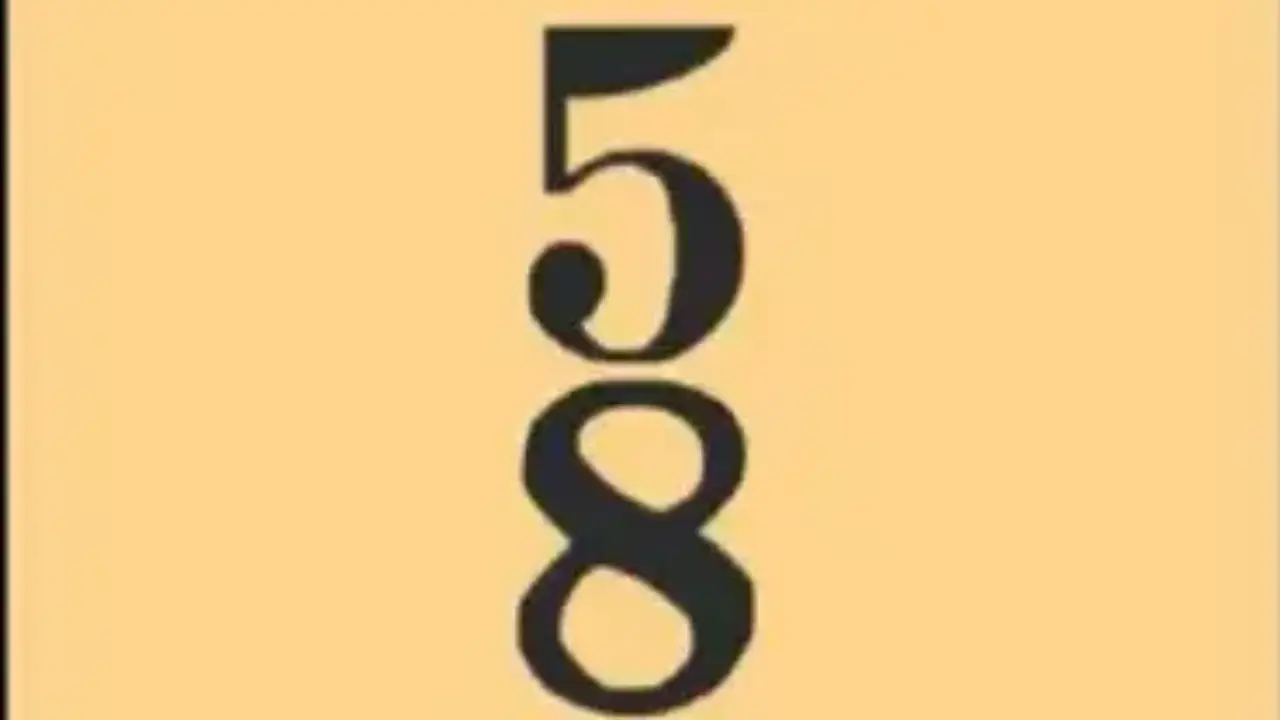
In this post, I'm going to give you some quick tips on everything you need to know about asymmetrical meters, also called asymmetrical time signatures. These are very similar to the asymmetrical subdivisions I talked about in my advanced subdivision video, so check that out if you're curious about how those more complicated subdivisions work. Here, let's talk about how asymmetrical meters work.
First, we need to know what a symmetrical meter is.
In This Post
- What Is a Symmetrical Meter?
- What Makes a Meter Asymmetrical?
- The Steady Beat Isn't Steady
- How to Count Asymmetrical Meters
- How 7/8 Works
- Moving Between 2/4 and 7/8 or 5/8
- Bonus Tip: Asymmetrical Groupings in Standard Meters
- A Shorthand for Marking Your Music
What Is a Symmetrical Meter?
Just about everything except for 5/8 and 7/8 is a symmetrical meter. Take something like 2/4 or 6/8. Those meters are able to split evenly in half.
I'm going to look at all of this in eighth notes, because it'll make more sense when we get to 5/8 and 7/8, since those are eighth note based meters. In 2/4 we have four eighth notes, and we get this nice evenness and symmetry to the meter. 6/8 is another symmetrical one, even though it's slightly different. We have groups of three eighth notes, then another group of three. Either way, we can draw a line down the middle, and each half of the measure looks exactly the same.
What Makes a Meter Asymmetrical?
Now look at 5/8. We have five eighth notes, and there's no way to divide in between the notes and have it be symmetrical. You'd have to draw a line right down the middle note to split it in half. That's why it's called an asymmetrical meter.
But we can take some of the principles from 2/4 and 6/8 and group these five notes into something that makes more sense. In 2/4 we had groups of two eighth notes, and in 6/8 we had groups of three. In 5/8 we can have a hybrid of the two. Maybe we group the first two together, then the last three together.
A grouping of two is called a duple beat, or a simple beat. That's why 2/4 is a simple meter: the beat divides into two eighth notes. A grouping of three is a triple beat, or a compound beat. 6/8 is a compound meter because the beat divides into three eighth notes. In the asymmetrical meters we get a combination of both, a simple beat and a compound beat.
We can also rearrange where the simple beat and the compound beat fall, and that's really important when you're dealing with asymmetrical meters. You need to be able to identify where the compound beats are and where the simple beats are.
The Steady Beat Isn't Steady
The other thing that makes these meters asymmetrical is that the steady beat isn't perfectly steady. It's consistent, but it's not exactly the same every time.
In symmetrical meters like 2/4 and 6/8, the beat stays consistent and steady. In the asymmetrical meters, we actually switch between the two. The eighth notes all stay steady. They're not changing speed. It's not eighth notes and then triplets, because that would be a 2/4 rhythm. They're all steady eighth notes. What changes is the beat, which goes short, long, short, long. So not every beat is exactly the same length.
How to Count Asymmetrical Meters
There are two ways I like to count these.
The very common way is to count "1, 2" on the duple or simple beats, and then "1, 2, 3" on the compound or triple beats.
Another way that might be even a little better keeps it similar to how it is when you're in 2/4 or 6/8. The short beat is just like the first beat of 2/4, so you count "1 and." The long beat is like the second beat of 6/8, so you count "2 and uh." The nice thing about counting it this way is that it keeps you oriented in the measure. You know where the downbeat is, and you know where beat 2 is.
The one thing that's less advantageous about this method is when you have sixteenth note subdivisions in your long beat. It's really easy to do that with "1 and 2 and 3 and," but "2 and uh" gets more complicated, and a sixteenth note version of it would be kind of tricky and cumbersome. So if there are sixteenth notes, it's probably better to stick with the straight numbers. But having that 2 there is really nice so you know where you are in the measure. It's similar to how in 6/8, when we have continuous eighth notes, we count "1 and 2 and 1 and 2 and."
Ultimately the counting is up to you, as long as you keep it steady with every eighth note being nice and steady.
How 7/8 Works
7/8 works exactly the same way. You have to find the simple beats and the compound beats, the duple beats and the triple beats. And there are all kinds of options for how they can group together.
You can have 2 plus 2 plus 3: "1 2, 1 2, 1 2 3." Or you can have 3 plus 2 plus 2: "1 2 3, 1 2, 1 2." You can feel that beat go long, short, short. The compound or triple beat is always the longer one, because we're asymmetrical and unsteady. Another option is 2 plus 3 plus 2: "1 2, 1 2 3, 1 2."
Once you have this framework of 2/4 versus 6/8, you can use all of the different subdivisions. Say you have a rhythm with sixteenth notes and a dotted eighth sixteenth in it. You still know exactly how to count that, because it's just like how we would count it in 2/4 and 6/8. You can use the straight numbers and count every single eighth note, or you can use the 2/4 and 6/8 style. Either way it sounds like exactly the same rhythm. We're just saying slightly different counts depending on which method you prefer.
Moving Between 2/4 and 7/8 or 5/8
What happens if you go from a 2/4 measure to a 7/8 or 5/8 measure? This is very similar to going between 2/4 and 6/8, where the eighth note stays steady.
Every single eighth note count is exactly the same speed, but the steady beat is changing. It's just like how, inside an asymmetrical meter, you go from a simple short beat to a compound longer beat. When we go from 2/4 to 6/8, it's basically that, but now it's happening within the measure. So whenever you're going from 2/4 to 5/8, the key is to keep the eighth notes going steady. You can feel the steady beat as quarter, quarter, quarter, dotted quarter.
That's what's so cool about asymmetrical meters. You get this really groovy short, long, short, long. If you string them together, you can even go from 2/4 to 6/8 to 7/8 to 5/8 and have all kinds of mixtures of those. It becomes this really fun groove of short, short, short, long, short, long, long, short. It's all asymmetrical and exciting and interesting.
One famous piece that does this is The Rite of Spring. It has all of these asymmetrical beats, and it caused a lot of upset at the premiere. If you don't know about The Rite of Spring, it's because of all of these really primal, really earthy, not natural musical phrases that throw things off a little bit. That's what's really fun about these meters.
Whenever you're using them, or going in between them, make sure you can find the compound or triple beat, where the three eighth note group is. Then you can move smoothly between simple meters, compound meters, and the combination of both in the asymmetrical meters.
Bonus Tip: Asymmetrical Groupings in Standard Meters
I want to give you one quick bonus tip. I know these quick tips are getting a little longer, but it's all good information.
Sometimes we'll have a more standard meter like 9/8, which is a compound meter with three eighth notes per beat and three beats. But sometimes you'll see something like "2 + 2 + 2 + 3" written above the music. That means the nine eighth notes, instead of being grouped into three groups of three like you'd traditionally do for 9/8, are going to be grouped into 2 plus 2 plus 2 plus 3. That makes it an asymmetrical meter: "1 2, 1 2, 1 2, 1 2 3."
This can happen in all kinds of simple meters. Sometimes you'll even see 8/8, the equivalent of 4/4, grouped as 3 plus 3 plus 2: "1 2 3, 1 2 3, 1 2." That's my favorite grouping, actually. Fun fact, but not super relevant here. You can see it works exactly the same as 5/8 or 7/8. You just have to find where the compound beats are. In the case of 8/8, there are two compound beats and then one simple beat.
A Shorthand for Marking Your Music
One other thing that can help is marking it in your music. When you have 7/8, 5/8, or 9/8 grouped this way and it isn't clear because they don't tell you above the music, you can use a little shorthand. Mark slashes for the simple beats and triangles for the compound beats.
That's all I've got for you. This video was actually suggested by somebody in the comments on another video, so I'm always happy to make videos that you're asking for. It's my favorite thing to do, to give you exactly what you need. Leave a comment with any suggestions you have, and I hope this helped.
Watch the Full Video
Want to see and hear all of this in action? Watch the full video here: Asymmetrical Meters: Everything You Need to Know [INSERT YOUTUBE LINK]
This post may contain affiliate links. If you purchase through one of them, I may earn a small commission at no extra cost to you. Thank you for supporting QuickStart Clarinet.