
Top 10 Clarinet Mistakes for Beginners
Every beginning clarinetist makes mistakes. That's completely normal, and it's part of learning. But some mistakes are so common that I see them come up over and over again with students at every level, and a lot of them are completely avoidable once you know what to look for.
Here are the ten most common clarinet mistakes beginners make, and how to fix every single one of them. These aren't ranked in any particular order, but they're all things worth keeping on your radar as you practice.
1. Using Too Much Cork Grease
Cork grease should be used as needed, not as a daily routine. If you listen closely to a dry cork, you can sometimes actually hear a little cracking or squeaking sound when the joint moves. That's your signal that some cork grease is warranted.
When you do apply it, a tiny amount is all you need, about as little as you'd use from a chapstick. Apply it sparingly around the cork and then rub it in with your fingers. That rubbing step is the one most people skip, and it's important because it works off any excess and distributes the grease evenly. Too much cork grease left sitting on the surface can actually damage the cork over time.
2. Ignoring Broken Equipment
This one seems obvious, but broken equipment is often harder to spot than you'd think. There are three things to check regularly:
- Mouthpiece damage: Look closely at the tip of your mouthpiece. Any chips or damage to the tip rail, even small ones, can significantly affect your sound and how the reed responds. If you see damage where the reed makes contact, it's time for a new mouthpiece.
- Bent keys and leaky pads: If a pad isn't fully sealing its tone hole, air will leak out and you'll get squeaks or notes that are difficult to play. This can be subtle, so if something feels off or a certain note consistently gives you trouble, a repair shop checkup is a good idea.
- Loose screws: Those tiny screws around the register key and elsewhere on the instrument can work themselves loose over time. Check them occasionally and tighten with a small screwdriver or even a fingernail if needed. Lose a screw entirely and you could end up with a key falling off, and those little pieces of metal are almost impossible to find on a floor.
3. Tightening the Ligature Too Much
The ligature only needs to be tightened until it stops on its own. You never need to crank it down. Remember that the sound on a clarinet comes from the reed vibrating, and if you clamp the ligature down too tight, you're restricting that vibration.
Snug enough that the reed isn't sliding around is exactly right. Beyond that, you're working against yourself.
4. Tense or Floating Fingers
These are actually two opposite problems, but they're both worth knowing about.
- Tense fingers: If your fingers are turning white at the knuckles or you're seeing deep rings on your fingertips after you play, you're gripping the clarinet too hard. You only need to cover the tone holes, not press into them with force. The tension makes fast playing much harder because you're burning unnecessary energy just holding the instrument.
- Floating fingers: This is the other end of the spectrum. As you play, your fingers drift away from the keys and tone holes and end up hovering in the air. We always want fingers close to over the holes, ready to go down. Minimal movement, minimal travel time. That's what makes technique clean and fast.
5. Bad Embouchure Habits
A few specific things to watch for here:
- Top teeth placement: Your top teeth should rest directly on the top of the mouthpiece. A lot of players are tempted to curl both lips over the teeth, but the standard approach is teeth on the mouthpiece. If the hard surface bothers you, a mouthpiece patch can make a big difference in comfort and stability.
- Biting down: Pressing your jaw closed and biting down on the mouthpiece pinches the reed and chokes off its vibration. Think about keeping your jaw open, with your chin pointing slightly downward, rather than squeezing shut.
- Soggy bottom lip: Your bottom lip should be firm against the reed, firm enough that the reed can vibrate against it without dampening that vibration. A floppy or loose bottom lip absorbs the vibration you're trying to produce.
6. Not Rotating Your Reeds
Reeds wear out. Every player knows that feeling of a reed that used to sound great and now just sounds flat and dull. The good news is that you can dramatically extend the life of your reeds by rotating them.
My recommendation is to keep at least four reeds in your case. Play one reed per session, then let it rest while you rotate to the next. Giving reeds time to dry out and rest against a flat surface keeps them in much better shape. A reed you play every single day for a week will be dead by the end of that week. The same reed, played one session per week on rotation, might last you a month or two.
7. Using Bad Reeds
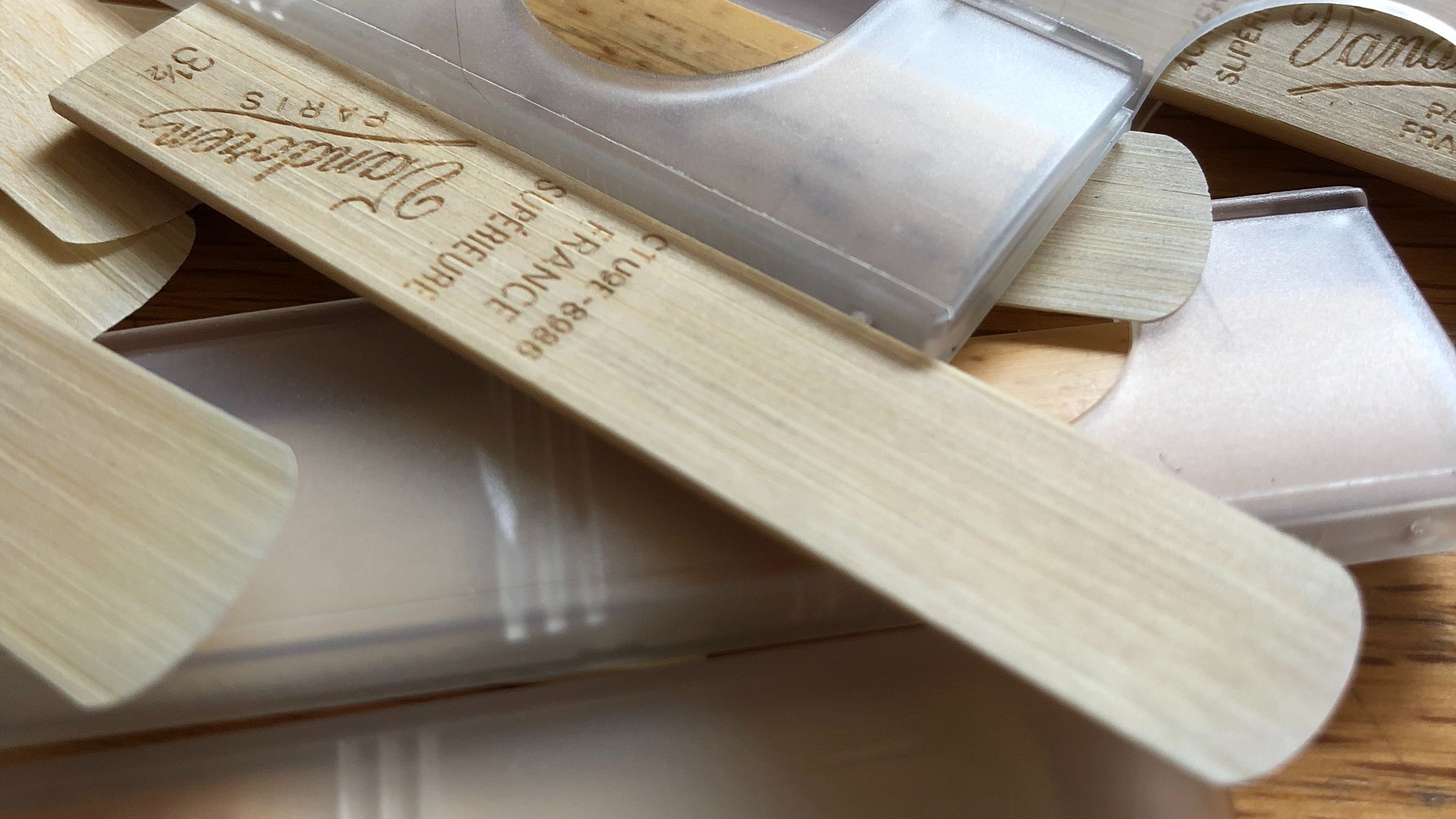
Not all reeds in a box are equal. Even within the same brand and strength, you'll get some great reeds, some okay reeds, and some that just aren't going to work. If you're having a rough practice and nothing feels right, try swapping your reed before assuming the problem is you. The reed is always the first thing to check.
On reed brands: the Rico Orange Box reeds tend to run very soft and usually aren't a good fit for anyone who's been playing more than a few weeks. I generally don't recommend them. Starting with a better quality reed like D'Addario Reserves will make your life noticeably easier.
8. Weak or Unfocused Air
The air is the sound. If your air isn't strong and directed, the reed won't vibrate properly and your sound will suffer.
There are two failure modes here. The first is blowing too softly, where there simply isn't enough energy to get the reed vibrating. The second is blowing with unfocused air that leaks out the sides of the mouth or just spreads out too wide before it reaches the reed.
What we want is a strong, narrow, fast airstream, similar to blowing through a coffee stirrer straw. All of that energy concentrated in one direction, pointed straight at the reed. The more efficiently you convert your air support into reed vibration, the better your sound is going to be.
9. Tonguing Incorrectly
Tonguing is one of the trickiest things to teach and learn because it all happens inside the mouth. No one can see what your tongue is doing, which means mistakes often go uncorrected for a long time.
The correct technique is: the tip of the tongue touches the tip of the reed to separate notes, with as little tongue motion as possible. The air stays continuous throughout. The tongue just briefly interrupts it.
Common tonguing mistakes include:
- Huffing the air: Starting and stopping the airstream on each note instead of using the tongue to separate them. The air should keep flowing.
- Throat tonguing: Using the throat to create articulation rather than the tongue. This gives a choking sound rather than a clean separation.
- Anchor tonguing: Placing the tip of the tongue against the bottom teeth or lip and then tonguing with the middle of the tongue. Remember, the tip of the tongue to the tip of the reed. Everything else stays put.
10. Not Enough Mouthpiece in the Mouth
This is the number one mistake I see, and it affects everything downstream. When you don't have enough mouthpiece in your mouth, the sound gets tight and constrained. When you have too much, it goes wild and squeaky.
Here's a helpful way to find the right amount: start with less mouthpiece than you think you need, then gradually take more in until the sound starts to get out of control. Then back off just a little from there. That sweet spot in between is where you want to be. The reed and mouthpiece have a natural contact point, and your bottom lip should sit right around that area.
If you're not sure, listen to the sound. It'll tell you everything you need to know.
I cover all ten of these mistakes with live demonstrations in my YouTube video on this topic. Seeing and hearing each mistake in action makes it a lot easier to recognize them in your own playing.
Disclosure: Some links in this post are affiliate links. If you make a purchase through them, I may earn a small commission at no extra cost to you. I only recommend products I genuinely trust.