
How to Count Quarter Note Triplets
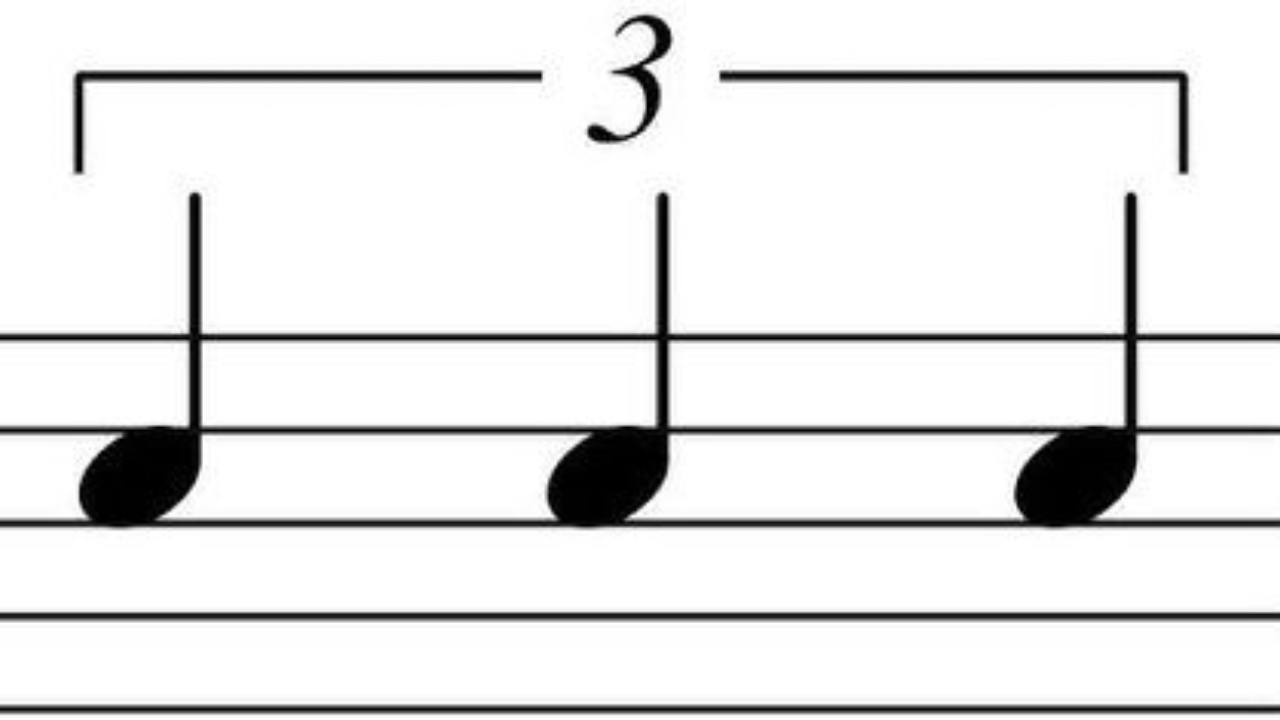
Quarter note triplets are one of the most commonly misread rhythms in music. If you've ever played them and had a teacher or conductor stop you because something felt off, you're not alone. The quarter note triplet is genuinely tricky to internalize, and most players approach it in a way that makes it sound uneven without even realizing it.
Here's how to count them correctly every time, using a method that actually works.
1. What a Quarter Note Triplet Actually Is
A quarter note triplet is three evenly spaced notes that together fill the space of two beats. So if you're in 4/4 time and you have a quarter note triplet, those three notes take up the space of beats three and four, for example, and they're perfectly even in relation to each other.
The key word is perfectly even. Not long-short, not uneven. Three notes in the time of two beats, divided equally.
2. Why Players Get It Wrong
In 4/4 time, we're used to subdividing beats into groups that fit neatly. Eighth notes give us: one-and, two-and, three-and, four-and. Sixteenth notes give us: one-e-and-a, two-e-and-a, three-e-and-a, four-e-and-a.
Quarter note triplets don't land on any of those sixteenth note subdivisions. They're in a completely different rhythmic grid. But because our brain wants the notes to fit neatly into what it already knows, most players unconsciously force the triplet into a sixteenth note pattern. The result sounds like: long, long, short, long, long, short. That's actually a dotted eighth followed by a sixteenth pattern, which is a real rhythm, just not the one written.
If you've ever played quarter note triplets and heard them described as uneven or rushed at the end, that's probably what was happening.
3. The Eighth Note Triplet Connection
Here's the conceptual link that makes this click. An eighth note is half of a quarter note. So a quarter note triplet is just two eighth note triplets tied together, two at a time.
Most players are already comfortable with eighth note triplets. You can feel them easily: one-trip-let, two-trip-let, one-trip-let, two-trip-let. They move quickly and they fit neatly within one beat, so they feel natural.
A quarter note triplet takes that same subdivision and ties every two eighth notes into one. So instead of six notes across two beats, you get three. The underlying pulse is identical. You're just combining them in pairs.
The practical key to playing quarter note triplets steadily is to keep eighth note triplets going in your head even when you're only playing the quarter note version. Let the subdivision keep running internally, and just play every other one.
4. The Taco Method
The taco method is the most useful practical tool I've found for this, and it's exactly what it sounds like.
Instead of trying to count quarter note triplets directly (which tends to get confusing), you say the word taco for each one. Taco is a two-syllable word with a natural emphasis on the first syllable, which mirrors how quarter note triplets feel: ta-co, ta-co, ta-co.
The real trick is what you do before the triplets start. Before the measure where the quarter note triplets appear, get eighth note triplets going in your head. Count: one-trip-let, two-trip-let, in whatever beats come before the triplet passage. Then, when the quarter note triplets hit, keep that subdivision rolling internally and switch to: taco, taco, taco.
Because you've already established the correct subdivision before you get there, the tacos will naturally land in the right place. You don't have to calculate it. The rhythm just flows.
5. Putting It into a Real Musical Context
Let's say you have a measure in 4/4 where the first half is a half note and the second half is a quarter note triplet.
While you're holding the half note, you subdivide internally: one-trip-let, two-trip-let. Keep that going the whole time you're holding the note. Then when beat three arrives, switch smoothly to: taco, taco, taco. Each taco takes the space of two eighth note triplet subdivisions.
In full: one-trip-let, two-trip-let, taco-taco-taco. That's the measure.
The more you practice establishing the triplet subdivision before you need it, the more natural this becomes. Eventually you won't need to consciously think about the tacos because the subdivision will already be in your body. But until that point, taco is your best friend for keeping this rhythm honest.
One last thing: if you ever catch yourself going long-long-short on these triplets, that's your signal that you've slipped back into sixteenth note thinking. Slow down, re-establish the eighth note triplet subdivision, and let the tacos do their job.
Rhythm is one of those things that makes a lot more sense when you can hear someone counting through it. If this post clicked for you, this video will make it stick even more.