
Is Your Reed Helping or Hurting Your Performance?
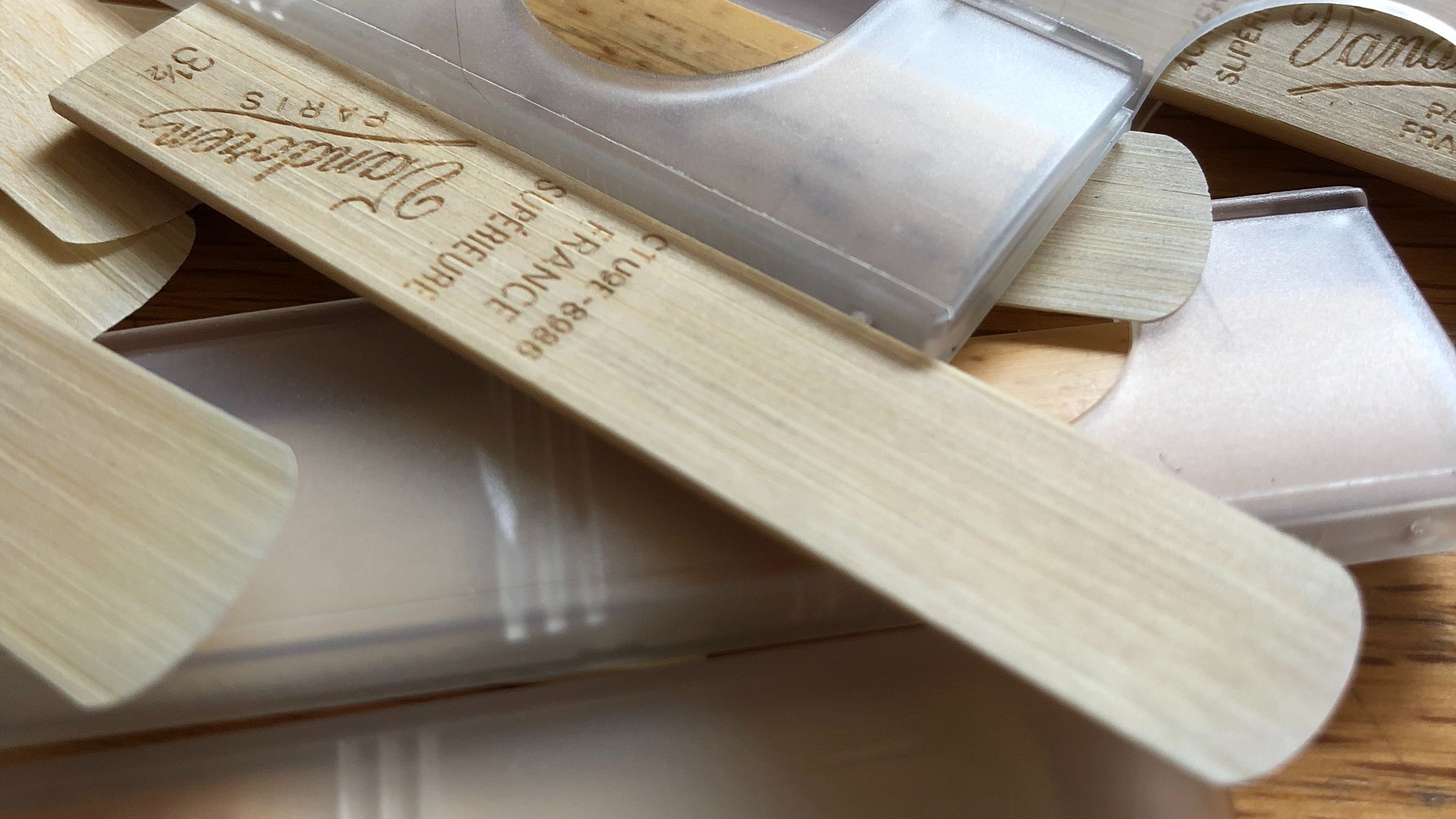
Picking a reed can feel like a guessing game. Even within a single box of the same brand and strength, individual reeds vary a lot, and what works great in the practice room doesn't always hold up when you actually need it.
Here are two practical tests you can use to quickly find out whether a reed is working for you or working against you, and what to do with that information.
1. Why Reed Hardness Matters
Reed hardness affects how much resistance the reed gives you, how much air and embouchure pressure it takes to get a good sound, and how the instrument responds across its full dynamic range. A reed that's not in the right range for your mouthpiece and playing style forces you to compensate constantly. You end up fighting the instrument instead of playing music.
This is especially important for performance. When you're a little nervous, your body tightens up slightly. Your embouchure might add a tiny bit of extra pressure. Your air support can go uneven. A reed that was barely working in the practice room will expose all of that under pressure. A reed that fits your setup well gives you some room for those natural fluctuations without everything falling apart.
These tests work well both for evaluating a new box of reeds and for deciding between the reeds you already have in rotation. Same strength label doesn't mean same actual hardness. There can be a real difference between a soft three and a hard three even when they came from the same box.
2. The Test for a Reed That Is Too Hard
Play softly in the upper chalumeau register, specifically around the throat tones. These are the notes just below where the register key kicks in: G, A-flat, A, B-flat.
With a reed that fits well, you should be able to produce a clear, focused, soft sound in this register without much effort. If the reed is too hard, this is where it shows up first. The sound will be airy and breathy. It takes a lot of effort to get anything approaching a clear tone at a soft dynamic up there. The reed just doesn't have enough flexibility to respond easily to a light, quiet airstream.
You can compensate for a hard reed. Adding more embouchure pressure or blowing harder will usually get it to respond, but that's not the point. If you have to force a reed to get a clean sound, it's working against you. Over a long practice session, fighting a hard reed is exhausting, and your lip will be worn out well before the session is over. For performance, you definitely don't want to be fighting your equipment.
There is one interesting use for a slightly hard reed: some players find that warming up on a harder reed in a practice session can build some useful resistance training for the embouchure. But that's a very specific and intentional choice, not something you'd want for regular playing or performing.
Quick version: If you can't play softly in the upper chalumeau with a clear, focused sound, the reed is probably too hard.
3. The Test for a Reed That Is Too Soft
Play in the upper clarion register or, if you're comfortable there, in the altissimo. Play those notes loudly with full air support.
A reed that's too soft will struggle here. You might hear the sound cut off entirely when you try to push it with volume. The note might crack or drop. You might find yourself instinctively backing off your air or opening up your embouchure just to get the note to stay steady, which is the opposite of what you'd want to do when you're trying to play loudly with a full sound.
A related test: try adding just a small amount of extra embouchure pressure while playing in that upper range. Ten or fifteen percent more than you normally use. With a reed that's too soft, that small addition of pressure will cause the note to collapse entirely or cut off. That's a serious problem for performance, because when you're nervous, that little bit of extra unconscious pressure happens naturally. You don't always notice it happening, but the reed will.
A soft reed can also have a hollow, kazoo-like quality to the sound even in the lower register. It plays easily, but there's no core or resonance to the tone. If the sound feels thin and papery rather than full and centered, that's another sign the reed isn't providing enough resistance.
Quick version: If you can't play loudly in the upper clarion or altissimo with a full, well-supported sound, the reed is probably too soft.
4. What to Do with the Results
The goal is to find a reed that lets you do both things comfortably: play softly in the upper chalumeau with a clear focused sound, and play loudly in the upper register with a full resonant sound. A reed that passes both tests is working with you, not against you.
When you're selecting reeds for a performance, run both tests and set aside the ones that fail either. You want reeds that give you flexibility across the full dynamic range, so that when you need to open up and really blow, the reed holds up, and when you need to bring it down to a whisper in a high soft passage, it responds without fighting you.
Reed responsiveness and balance are separate topics that go deeper into this, but hardness and softness are the right starting point. Once you know your reed is in the right range, you can start fine-tuning from there.
Hearing the difference between a hard reed and a soft reed in these tests is way more revealing than reading about it. I demonstrate both tests with real reeds in my YouTube video on this topic, including what a hard reed sounds like struggling through soft throat tones and what a soft reed does when pushed in the upper register.